

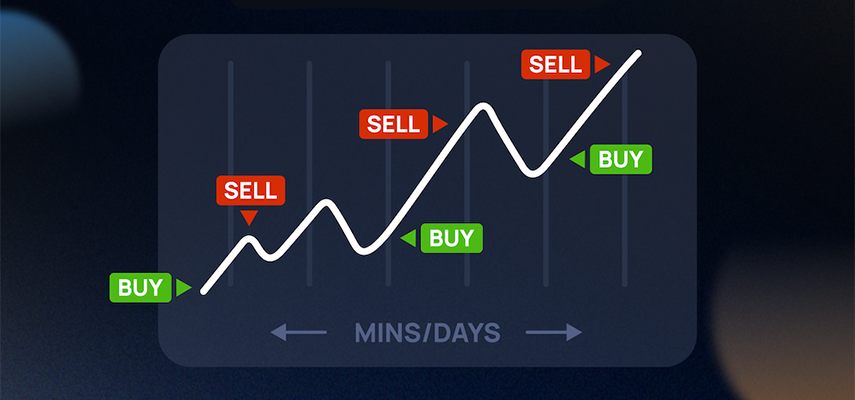
Every successful gold trader has one thing in common: a strategy built on reliable gold trading signals. Scalping and swing trading are the two dominant approaches, each offering a unique path to profit. Your ideal choice depends on your time, risk appetite, and personal goals. Understanding how each strategy uses gold buy and sell signals differently is the key to unlocking better trades and more consistent returns.
Understanding Gold Scalping Trading
Gold scalping is a fast-paced strategy focused on capturing small price movements within minutes. Scalpers execute multiple trades throughout the day, targeting quick, consistent profits. It demands full market attention, lightning-fast execution, and tight risk management. Gold scalping signals are highly time-sensitive, making real-time data and low-latency platforms absolutely essential for success.
Tools Used in Scalping
Scalpers rely on 1-minute to 5-minute charts, RSI, MACD, Bollinger Bands, and Level 2 pricing. Low-spread brokers and fast execution platforms are non-negotiable tools for effective scalping.
Scalping Signal Characteristics
Gold scalping signals are short-lived, high-frequency, and precision-focused. They offer tight entry and exit points with small take-profit targets, requiring immediate action and disciplined stop-loss placement in every trade.
Understanding Gold Swing Trading
Gold swing trading captures medium-term price movements over days or weeks. Swing traders focus on broader market trends, key support and resistance zones, and technical pattern breakouts. It requires less screen time than scalping but demands patience and strong analytical skills. Gold swing trading signals are well-suited for traders who prefer quality setups over high trade volume.
Tools Used in Swing Trading
Swing traders use 4-hour and daily charts, Fibonacci retracements, moving averages, trend lines, and fundamental analysis. These tools help identify high-probability setups across broader market cycles.
Swing Trading Signal Characteristics
Gold swing trading signals are low-frequency, high-reward, and trend-driven. They feature wider stop losses, larger take-profit targets, and longer holding periods, making them ideal for traders seeking bigger moves with fewer daily decisions.
Scalping vs Swing Trading: Key Differences
Both strategies use gold trading signals but differ significantly in execution, pace, and risk profile. Here is a clear breakdown of the five key differences every trader should understand before choosing their approach.
1. Trade Duration
Scalping trades last seconds to minutes. Swing trades run for days to weeks. Duration directly impacts strategy selection, signal type, platform requirements, and the overall level of active market monitoring needed.
2. Signal Frequency
Scalping generates dozens of gold signals daily across short timeframes. Swing trading produces fewer signals, but each carries higher conviction, stronger context, and a better overall risk-to-reward ratio per trade.
3. Risk Level
Scalping carries higher operational risk due to speed and volume. Swing trading involves overnight exposure and broader stops but allows more time for thoughtful, calculated decision-making before entering any position.
4. Tools Used
Scalping demands ultra-fast execution platforms and short-timeframe indicators. Swing trading relies on longer timeframe charts, trend analysis tools, and fundamental data for more strategic, well-researched trade setups.
5. Profit Style
Scalping targets small, frequent gains that accumulate over time. Swing trading pursues larger single-trade profits. Both can be highly profitable when paired with the right gold trading signals and disciplined risk management.
Role of Automation in Both Strategies
Automation plays a powerful role in both scalping and swing trading. Gold trading bots and Expert Advisors (EAs) execute predefined strategies without emotional interference, ensuring consistent signal-based trade execution around the clock across both styles.
Automated Gold Trading Advantage
Automated gold trading eliminates hesitation and human error. Bots react instantly to signals, manage risk automatically, and operate 24/5, giving both scalpers and swing traders a consistent, disciplined edge in live markets.
Choosing the Best Gold Trading Signals
Selecting the best gold trading signals depends entirely on your strategy. The right signal service should align with your timeframe, trade frequency, and risk tolerance. Here is what to select based on your chosen approach.
For Scalping Traders
Prioritize live gold signals with real-time delivery, tight spreads, and short-timeframe analysis. Speed and accuracy are everything. Choose providers offering instant Telegram or app-based alerts for immediate execution.
For Swing Traders
Focus on gold swing trading signals with strong trend context, clear support and resistance levels, and well-defined risk-reward ratios. Daily or 4-hour chart analysis with fundamental backing delivers the best results.
Which Strategy Is More Profitable?
Profitability depends on execution, discipline, and strategy fit, not the method itself. Scalping can generate consistent daily income but demands intense focus and time. Swing trading offers larger per-trade returns with less screen time but requires patience. Both strategies become significantly more profitable when powered by accurate gold trading signals, solid risk management, and a well-tested trading plan tailored to your personal goals and lifestyle.
Scalping or Swing Trading: The Right Choice Changes Everything
There is no universal winner between scalping and swing trading, only the strategy that fits you best. Scalping suits active, fast-thinking traders. Swing trading works for analytical, patient minds. What both share is the need for reliable gold trading signals to maximize results. Tradepedia UAE provides the tools, signals, and expertise to help you trade gold with confidence for the strategy of your choice. Join Tradepedia UAE today and take your gold trading to the next level.
Scalping vs Swing Gold Trading Signals: Common Questions Answered
1. Which is better for beginners: scalping or swing trading in gold?
Swing trading is generally better for beginners. It requires less screen time, allows more thinking space, and uses broader signals that are easier to follow. Scalping demands faster decisions and deeper market experience to execute consistently and profitably.
2. Can Gold Trading Bots be used for both scalping and swing trading?
Yes. Gold trading bots are highly effective for both strategies. Scalping bots execute rapid trades automatically, while swing trading EAs monitor longer timeframes and enter positions based on predefined trends and signal criteria without manual intervention.
3. How important are Gold Trading Indicators in choosing signals?
Gold trading indicators are essential. They confirm signal validity, identify trend direction, and highlight entry and exit timing. Using multiple indicators together, such as RSI, MACD, and moving averages, significantly improves signal accuracy across both scalping and swing strategies.
4. Are Live Gold Signals more useful for scalping or swing trading?
Live gold signals are most critical for scalping, where timing is everything. However, swing traders also benefit from real-time alerts to catch breakouts early. For both strategies, fast signal delivery directly impacts trade quality and overall profitability.
5. Can combining scalping and swing trading improve profits?
Absolutely. Combining both strategies allows traders to capture short-term gains through scalping while holding swing positions for larger moves. Using separate gold trading signals for each approach helps manage risk effectively and diversifies your overall profit potential.