


Why Dubai Is Home to the Leading Financial Trading Academies in the Region

Over the years, Dubai has transformed from being just a regional business center to a financial powerhouse. Although Dubai has always been known for its amazing real estate and tourism industries, there is another flourishing industry which has developed in Dubai – financial trading education. Dubai is now considered the top location for financial trading schools and academies in the region. The rise in the popularity of foreign exchange training classes, stock market training, and cryptocurrency training in Dubai is not an accident but a result of the vision of the government, strong regulations, and top-notch schools like Tradepedia UAE. In this article, we will discuss why Dubai is the top choice for financial trading education and how to use the opportunities in Dubai to become financially independent. The Emergence of Dubai as a Financial Education Center The financial market of Dubai is characterized by innovation and accessibility. Being located between East and West, Dubai is a crucial financial link between the financial markets of Europe, Asia, and America. Such geographical position gives trading schools in Dubai the opportunity to provide their students with the ability to observe the movement of the global market at overlapping trading hours. Moreover, the creation of the Dubai International Financial Center (DIFC) has created a reliable and regulated environment for financial institutions. Those institutions, which work either within the framework of the DIFC or outside of it, have a stamp of credibility, which is important in financial education in Dubai. Such a level of reliability ensures that students would not rely on unregulated online trading websites but seek education from reputable academies. Why Trading Academies Do Well in the UAE The rise of many trading academies in the UAE is due to a number of reasons, both economic and psychological. Below are some of the reasons why Dubai has surpassed other hubs when it comes to providing financial education: 1. Access to the Global Economy One of the main advantages of studying forex trading in Dubai or commodities is that one is not restricted to their own economy. Instead, the city provides easy access to the global economy, which makes it an ideal place for hands-on education in trading. 2. Desire for Professional Education In today’s world, there is more information available than ever before. However, people are dissatisfied with all the information available online on websites like YouTube. They want to learn more and gain skills from a good trading academy in Dubai. 3. A Controlled and Secure Environment Trust is the core of the financial world. The UAE government controls all financial trading academies in such a way that makes them highly transparent and ethical. This control serves to safeguard the students and provide them with an education that is credible and commercially applicable. 4. Technological Focus on Fintech Dubai is a technologically advanced city that is innovative in terms of fintech. Trading academies in Dubai make use of the latest technology in trading like advanced trading platforms, algorithmic trading, and live market feeds. Tradepedia UAE: The Benchmark for Financial Market Education Of all the institutions present here, Tradepedia UAE can definitely be considered the benchmark for how financial market education should ideally take place. Unlike quick courses that emphasize only the importance of signals, Tradepedia aims at helping its students build a career in trading. Tradepedia provides a full range of educational courses for forex trading, stock market operations, commodities, and cryptocurrencies. What makes Tradepedia special is its overall approach to the subject. The courses taught here do not just focus on “buying and selling,” but also on technical analysis, risk management, and behavioral finance. By making sure that students learn how to control their emotions and calculate risk-reward ratios, Tradepedia UAE teaches them everything they need to know about the market and its operations. The educational programs offered here teach novices everything about global financial systems. Things to Look for in a Trading Academy in Dubai When trying to find the correct educational route, it is vital to find an academy that suits your career goals. Be it learning stock market courses in Dubai or learning how to trade forex in Dubai, here are some of the features you should consider: Credentials and Good Reputations: Try to find an academy that has a good reputation within the financial industry or is connected with well-known financial organizations such as Tradepedia UAE. Diverse Curriculum: Make sure that the academy offers diverse courses that cover different asset classes (Forex, Stocks, Crypto). Application: It is necessary to put theory into practice. Thus, the best trading academy in Dubai must have live trading sessions, charting lessons, and even simulation trading sessions. Mentorship: Getting access to experienced market players can be extremely helpful. The Future of Trading Education in the Region The future is looking promising for financial education in Dubai. With the UAE continuing to diversify its economy, there is an increasing need for alternative sources of income and financial literacy. In particular, we are witnessing an increased interest in educational programs for cryptocurrencies and algorithmic trading, which shows maturity in the market. With people increasingly desiring to have a stake in their future, Dubai is well positioned to be the world leader in trading education. The dedication and quality of Dubai as a location, along with the high-quality institutions such as Tradepedia, will ensure that the region becomes home to the next generation of financial experts. Frequently Asked Questions Why is Dubai regarded as the best place for financial trading academies? Dubai provides a good geographical position, strong regulation systems such as the DIFC, and access to global markets; therefore, it becomes the perfect place to obtain high-level trading knowledge. What will be taught in professional trading classes? Professional trading classes usually consist of technical analysis, fundamental analysis, risk management, trading psychology, and specific market knowledge for forex, stocks, and crypto. Is it possible to succeed in online trading courses? Certainly, if they provide you with a well-developed learning path and live interaction
Why Chart Analysis Skills Are Essential for Serious Traders in the UAE

The financial markets across the United Arab Emirates, especially in Dubai and the wider DIFC region, have become increasingly fastpaced and sophisticated. From Dubai Financial Market (DFM) and Abu Dhabi Securities Exchange (ADX) to forex and cryptocurrency trading, traders now operate in a highly competitive environment where information travels instantly and price action moves rapidly. In this context, chart analysis skills are no longer optional extras—they are core competencies for any serious trader. Chartbased analysis, commonly known as technical analysis, helps traders understand how prices move, when trends form or break, and how to manage risk in a structured way. For UAE traders in forex, equities, commodities, and cryptocurrencies, mastering chart analysis means moving from guesswork to disciplined, rulesbased decisionmaking. Charts – Practical Market Understanding At DAMAC Park Towers, DIFC Area, Dubai, United Arab Emirates, our focus is on practical market understanding through real charts and realistic trading scenarios. You don’t just learn abstract concepts; you work directly with live and historical charts across major asset classes used by active traders in Dubai and the wider Emirates. Through structured sessions, you: Analyze realworld price charts from global indices, UAElisted equities, major forex pairs, and leading cryptocurrency pairs. Learn how professional analysts and trading desks in Dubai and the DIFC use candlestick patterns, trendlines, moving averages, and oscillators to validate trade ideas. Apply these concepts on online trading platforms, so your chartreading skills translate directly into your own trading decisions. This handson approach mirrors the way market analysis teams operate in institutional and semiprofessional environments. Instead of relying on generic signals or socialmedia tips, you develop the ability to read price action independently, a skill that is especially valuable in the UAE’s fastmoving forex, stock, and crypto markets. Why Chart Analysis Matters in the UAE Trading Environment The UAE, and Dubai in particular, has emerged as a key hub for institutional capital, fintech innovation, and active retail trading. This environment is characterized by: Quick responses to global news, oilprice movements, and policy shifts. High liquidity in forex and crypto markets, leading to rapid price swings. Growing participation from UAEbased traders in stocks, forex, and digital assets. In such markets, relying only on longterm fundamentals or news headlines is often too slow. Chart analysis fills the gap by helping traders: Identify trends and ranges in real time. Spot support and resistance levels where price is likely to pause or reverse. Manage risk with clear entry and exit points instead of vague “hopebased” trading. Professional desks in Dubai and the DIFC rarely trade purely on intuition. They combine qualitative views with quantitative chart signals, and so can serious UAE traders with the right training. Key Chart Analysis Skills for Serious UAE Traders To build a competitive edge in the UAE, your chartreading skill set should include several core components. 1. Interpreting Candlestick Charts Candlestick patterns are the foundation of shortterm and intraday trading. Recognizing reversal patterns (engulfing, pin bars, inside bars) and continuation patterns helps you read market sentiment and spot potential turning points before the broader market reacts. 2. Mapping Support, Resistance, and Trendlines Support and resistance levels, along with clearly drawn trendlines, define the structural framework of any market. By identifying these zones, you can: Avoid entering trades in lowprobability areas. Plan entries and exits near key decision points where price is most likely to react. 3. Applying Indicators and Oscillators Indicators such as RSI, MACD, and moving averages help confirm or filter signals generated by price action. When used correctly, they: Reduce false breakouts and whipsaws. Highlight overbought or oversold conditions in forex, crypto, and equities. 4. Studying Chart Patterns Patterns like head and shoulders, triangles, flags, double tops/bottoms, and cupandhandle provide predictive frameworks for breakouts and reversals. Many professional traders in Dubai and the DIFC rank these among their most reliable tools for structuring trades. 5. Practicing in a ProfessionalStyle Environment The most important skill is consistent practice under realistic conditions. At DAMAC Park Towers, DIFC Area, Dubai, United Arab Emirates, the focus is on simulating realworld trading environments—where decisions are made under time pressure and based on clear chartdriven rules rather than emotion or speculation. FAQs – Chart Analysis for UAE Traders Q1: What is chart analysis, and why do traders in the UAE need it? Chart analysis (technical analysis) is the study of price charts, patterns, and indicators to forecast future market movements. Traders in the UAE, especially in Dubai and the DIFC, need it to read price action, spot trends, and manage risk in fastmoving markets such as forex, equities, and cryptocurrencies. Q2: Can beginners in Dubai learn technical analysis effectively? Yes. Many chart analysis courses in Dubai are designed for beginners and focus on core concepts such as candlestick charts, support and resistance, trendlines, and basic indicators, using practical exercises that mirror real trading environments. Q3: How does chart analysis improve risk management in online trading? By identifying key support and resistance levels and trend structures, chart analysis helps traders set precise stoploss and takeprofit levels and avoid ambiguous entries. This leads to better riskreward ratios in online crypto trading and forex trading in the UAE. Q4: Is chartbased analysis useful for cryptocurrency trading in Dubai? Yes. Cryptocurrency markets are highly volatile and driven largely by price action and technical levels. Many traders in Dubai use technical analysis for crypto trading, including candlestick patterns and indicators, to structure their entries and exits. Q5: Where can traders in Dubai train in a professionalstyle chartanalysis environment? Traders can train in professionalstyle environments at DIFCarea learning centers, including those located at DAMAC Park Towers, DIFC Area, Dubai, United Arab Emirates. These centers offer real chart practice, scenariobased learning, and structured modules that mirror how institutional desks analyze markets. Conclusion Chart analysis is more than a collection of tools—it is a disciplined way of thinking about markets. For serious traders in the UAE, especially those operating in Dubai and the DIFC, mastering chartreading skills means gaining an edge that aligns with professionalgrade standards. Whether you are focused on
UAE Trading Strategy Development: A Complete Guide to Building Profitable Trading Systems

The financial landscape in the UAE has grown rapidly with the Dubai Financial Market (DFM), Abu Dhabi Securities Exchange (ADX), and expanding foreign exchange and crypto sectors attracting global investors. This evolution has shifted trading from speculation to a more professional, system-based approach. Success in these markets depends on disciplined trading strategy development rather than luck. Traders must focus on building, testing, and executing structured systems aligned with market behavior. In Dubai and across the Emirates, mastering trading strategy development is essential for achieving consistency, managing risk effectively, and improving long-term profitability in highly dynamic financial environments. 1. Trading Strategy Development in UAE Financial Markets Developing a trading strategy in UAE financial markets requires combining global macroeconomic insight with regional market dynamics. Factors such as oil price fluctuations, geopolitical stability, and global liquidity flows strongly influence performance. A clear strategy begins with defining trading objectives, risk tolerance, and time horizon. Whether targeting DFM volatility or Forex liquidity during London session overlap, every decision must follow rules. A disciplined trading plan replaces emotional reactions with predefined entry and exit conditions, ensuring consistency. In fast-moving UAE markets, strategy functions as blueprint for capital allocation and decision-making consistently. 2. Professional Trading Strategy Building in Dubai Dubai has established itself as a global financial hub, attracting institutional-grade trading expertise. Professional trading strategy building in Dubai follows hedge fund and proprietary trading standards rather than retail-style decision-making. Instead of relying on single indicators, professionals use multi-layered analysis combining technical, fundamental, and quantitative methods. Strategies are rigorously back tested against historical market conditions, including periods of high volatility and inflationary cycles. Strong emphasis is also placed on trading psychology, ensuring discipline during drawdowns. Ultimately, trading is treated as a structured business system that is scalable, adaptive, and data-driven. 3. Technical Analysis for Trading Strategy Development UAE Technical Analysis for Trading Strategy Development in the UAE focuses on interpreting price action and volume to anticipate future market movements. Traders rely on chart structures, support and resistance zones, and indicators such as RSI, Moving Averages, and Bollinger Bands. In strategy design, technical analysis serves as the primary signal generator for entries and exits. For example, a long position may be triggered when price breaks resistance with strong volume confirmation. This structured approach helps UAE traders execute with precision, replacing speculation with data-driven decisions and revealing institutional market behavior. 4. Forex Trading Strategy Development UAE Forex Trading Strategy Development in the UAE is driven by the market’s high liquidity and 24-hour accessibility. Traders commonly focus on major pairs such as EUR/USD and regionally influenced pairs connected to USD dynamics. A strong strategy incorporates macroeconomic factors like interest rate differentials between the US Federal Reserve and the UAE Central Bank. Approaches such as trend following and carry trades are widely used. Because Forex involves high leverage, strategies must account for spreads, swap costs, and volatility. Whether scalping or swing trading, alignment with pair-specific behavior is essential for consistent execution. 5. Risk Management in Trading Strategy UAE Risk Management in Trading Strategy Development in the UAE is essential for long-term capital preservation. Even strong trading systems fail without disciplined risk control. The primary rule is limiting exposure by risking only 1–2% of total capital per trade. Stop-loss orders protect against unexpected market moves, while slippage management is crucial in volatile UAE conditions. Diversification across sectors reduces concentration risk. A robust risk framework ensures consecutive losses do not significantly damage the account, helping traders remain consistent and sustainable. 6. Algorithmic and Advanced Trading Strategies UAE Algorithmic and Advanced Trading Strategies in the UAE are becoming increasingly popular as markets adopt advanced technology. These strategies use automated systems to execute trades based on predefined rules, allowing faster and more accurate decision-making than manual trading. In Dubai, algorithms are used for arbitrage opportunities between global markets and high-frequency trading. They typically require coding knowledge such as Python or MQL. For non-coders, copy trading and Expert Advisors provide automation, helping reduce emotional bias and improving overall trading consistency. 7. Trading Strategy Development for Beginners in UAE Trading Strategy Development for Beginners in the UAE should focus on building strong foundational skills with simple methods. New traders often struggle by overloading charts with indicators, which creates confusion. A better approach is learning market structure, including trends and ranges. Demo accounts are essential for practicing without risking capital. A basic trend-following strategy, such as trading higher highs and higher lows, is highly effective. The main goal is consistency, discipline, and gradual improvement rather than expecting quick profits from early trading attempts. 8. Institutional Trading Strategy Training UAE Institutional Trading Strategy Training in the UAE develops professional trading skills aligned with banks and hedge funds. It focuses on order flow, market depth, and liquidity rather than only price charts. Programs in Dubai, including Tradepedia, teach smart money concepts and institutional behavior. Traders learn to analyze buy-side and sell-side pressure to understand market movement by large players. This training helps corporate teams and institutions improve execution, strengthen risk control, and apply disciplined, precise strategies for consistent and efficient trading performance in financial markets. High-Intent FAQs: Trading Strategy Development in UAE 1. What is trading strategy development in the UAE? Trading strategy development in the UAE is creating structured rules for buying and selling in financial markets, including entry, exit, and risk management. 2. Why is trading strategy development important in UAE financial markets? It is important because UAE markets are influenced by global and regional factors, and a strategy helps remove emotional trading decisions. 3. How do traders in Dubai develop a trading strategy? Traders in Dubai develop strategies using risk planning, technical and fundamental analysis, and back testing before using real capital. 4. What are the best trading strategies used in UAE? Common strategies in the UAE include trend following, breakout trading, swing trading, and Forex carry trades. 5. Do beginners in UAE need a trading strategy? Yes, beginners need a trading strategy to stay disciplined, manage risk, and avoid emotional trading mistakes. 6. What role does
Top 5 Trading Strategies That Actually Work for Beginners
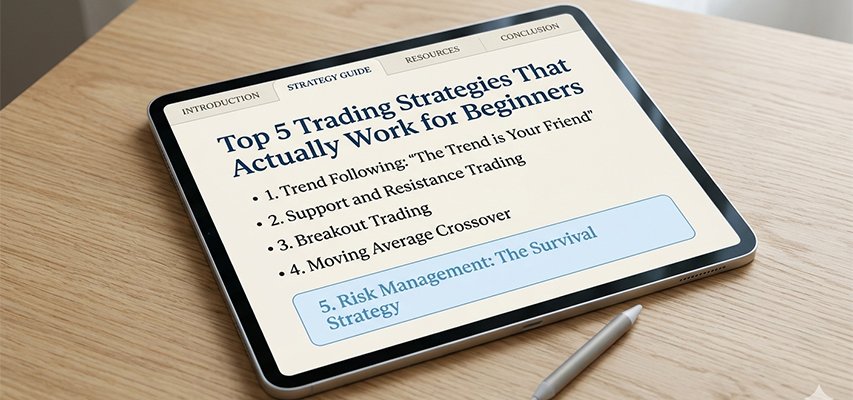
The financial sphere in the UAE is booming like never before with the efforts put in by the Dubai International Financial Centre and with the advent of easy-to-use trading applications, but as an absolute beginner, you must have been hearing about many people losing their shirts while others have made a fortune overnight. It seems as if it takes a genius of an economist to read the charts let alone earn from your trading activities. But here’s the thing: You do not have to become a genius to start trading. Many beginners get into the foreign exchange and stock markets. In order to succeed, you need a trading strategy – a plan telling you when to get into the market and more importantly, when to exit. And if you want to learn the basics of financial trading without drowning in technicalities, then you are at the right place. Now let us analyze the top five trading strategies which are proven effective for newbies. 1. Trend Following Strategy: “The Trend is Your Friend” It may seem old-fashioned, but this rule has become one of the most powerful trading strategies due to its high efficiency. The market moves in one direction: upward, downward, or sideways. Trying to catch falling knives and predicting the exact turning point of market movements can be really risky. Your role as a newbie is to recognize the direction of the movement and act according to it. How it works: You need to observe the market graph and see if the prices show any uptrends or downtrends. For instance, if the prices are increasing and forming higher highs and higher lows, it means you have an uptrend, so you search for buying opportunities. In case of downtrend, lower lows appear, meaning that it is time to sell. Support and Resistance Trading Strategies Before you start using complicated technical tools, become an expert in Support and Resistance trading strategies. Imagine Support as the bottom of the price, while Resistance is the roof of the price. Support Level: The point where the falling price reverses because of buyer activity. Resistance Level: The point where the rising price reverses due to seller activity. The Trading Strategy: The trader buys the stock when the price reaches the Support level and sells when the price touches the Resistance level. The approach is based on Technical Analysis. It provides the trader with the ability to estimate his risks accurately. For instance, if the price breaches Support level, the trade is definitely wrong. Breakout Trading Strategy What does it mean if the stock breaches its resistance point? Normally, it goes down. However, in some cases, it breaks through with heavy trading volume. In this case, a breakout occurs. Explanation: All you need to do is wait for the stock to clearly penetrate an identified resistance area. This indicates that the bulls have triumphed over the bears and a new higher price level has been created. Moving Average Crossover When you need a tool that helps you visualize your trading trend, then the Moving Average cannot be overlooked. This is an important smoothing tool, which helps you see the real trend. How it works: A trader uses two different lines, for example, a 50-day MA, and a 200-day MA. When one line goes above the other, then it signals a Buy. If it goes below the other, then a Sell signal will come up. Why it works: There are no emotions involved. You do not have to wonder about whether it is a buying or selling period. Risk Management: The Survival Strategy It is not a means to enter into a trading position; however, it ranks as the most significant strategy here. You can have the best trade-in the world but will still be wiped out by risk management failure. Professional financial education teaches that risk management comes first always, and this entails: Position Sizing: Avoid risking more than 1-2% of capital in one trade. Stop-Loss Orders: A predetermined level where you leave the trade in case it works against you. Diversification: Not risking all your eggs in one basket, for example, mixing foreign exchange, commodities, and equities. Why Theory Is Not Enough Learning about all of these approaches and methodologies is always very helpful and useful, but implementing them into real-life situations can become tricky. The UAE financial market operates very quickly. Stock prices tend to change drastically due to oil industry news, central banks’ decisions, and geopolitical factors all over the world. This is when the difference between knowledge and practical application becomes obvious. Unfortunately, many traders make mistakes when trying to enter the market, simply treating the stock exchange as a hobby. To become a professional trader, it is crucial for you to gain some kind of professional knowledge. You have to understand what makes stock prices move; simply memorizing theories is not enough. And here is when our platform comes in handy. At Tradepedia UAE, we focus primarily on helping you overcome this knowledge gap. Instead of giving you just another book to read, we aim to offer some practical market experience. Conclusion The key point here is that trading is a process, and not an event. Begin by utilizing these five approaches – trend following, support and resistance analysis, breakouts, moving averages, and most importantly, risk management. Learn each technique thoroughly. Is it time for you to get rid of the uncertainty? Do you have any desire to become an expert at foreign exchange, commodities, and equities trading? Then sign up with Tradepedia UAE today! Let us teach you the techniques required to analyze and trade the markets effectively.
Stop Losing Money: Common Trading Mistakes Beginners Make (And How to Fix Them)
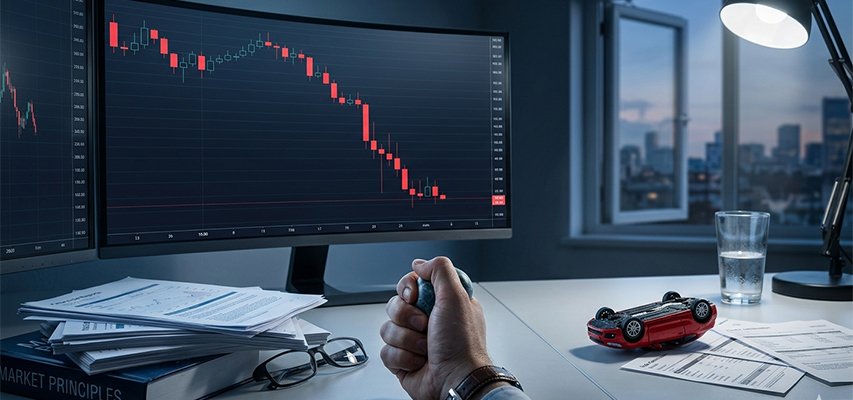
Are you tired of watching your trading account slowly bleed out? You are not alone. The financial markets in the UAE are moving faster than ever. With easy access to Forex, Commodities, and Cryptocurrencies, thousands of new investors enter the market every day hoping to secure financial freedom. Yet, statistics reveal a harsh truth: nearly 90% of beginner traders fail to turn a profit. Why? It is rarely because the market is rigged. It is usually because they are making predictable, avoidable errors. At Tradepedia, we believe that trading is not gambling; it is a professional skill that must be learned. If you want to build a strong understanding of financial markets, you first need to identify what is holding you back. Here are the most common trading mistakes beginners make and, more importantly, how you can fix them today. 1. Trading Without a Solid Education The biggest mistake is diving into the deep end without learning how to swim. Many beginners rely on gut feeling, YouTube rumors, or random tips from social media influencers. This is the fastest way to lose capital. To succeed, you need institutional-grade financial education. You must understand the difference between fundamental and technical analysis. You need to know how to read an economic calendar and how global events impact the UAE market. How to Avoid It: Treat trading like a profession, not a hobby. Before risking real money, invest in your knowledge. At Tradepedia, our curriculum is designed to bridge the gap between theory and practice, ensuring you understand exactly why prices move before you click buy. 2. Ignoring Risk Management Principles This is the silent killer of trading accounts. Beginners often obsess over how much money they can make, completely ignoring how much they could lose. They might put 50% of their account balance into a single trade, hoping for a home run. Professional traders focus on Risk Management. They understand that preserving capital is the only way to stay in the game long-term. This involves understanding diversification (not putting all your eggs in one basket) and mitigation strategies (setting stop-loss orders). How to Avoid It: Never risk more than a small percentage of your capital on a single trade. Learn to calculate your risk-reward ratio before you enter a position. At Tradepedia, we drill risk management into our students until it becomes second nature. 3. Letting Emotions Dictate Decisions Fear and Greed are powerful psychological forces. When a trade goes against them, beginners often freeze (fear) and refuse to cut losses, hoping the price will come back. When a trade goes in their favor, they often exit too early (fear of losing profit) or hold too long (greed), only to see the profits vanish. Successful trading relies on a disciplined, cold mindset. You need Real-World Market Insight to recognize when your emotions are hijacking your strategy. How to Avoid It: Develop a strict trading plan and stick to it. Define your entry, exit, and stop-loss levels before you open the trade. If you cannot control your psychology, you will struggle to control your portfolio. 4. Overtrading and “Revenge Trading” Have you ever lost money and immediately opened a new, larger trade to win it back? This is called Revenge Trading. It is emotional suicide in the markets. Similarly, some beginners feel the need to be constantly in a position, overtrading to satisfy an itch for action. The market does not always offer opportunities. Sometimes, the best trade is no trade. How to Avoid It: Set strict rules for when you will trade. If you hit your daily loss limit, walk away from the screen. Discipline is what separates amateurs from institutions. 5. Neglecting Asset Class Correlations The financial markets are interconnected. Beginners often look at Forex in isolation or treat Crypto as a standalone bubble. However, commodities prices (like Oil) heavily impact currency pairs in the UAE. Equities performance can signal shifts in investor sentiment. Without a holistic view of different asset classes—Forex, Equities, Commodities, and Cryptocurrencies—you are trading with one eye closed. How to Avoid It: Learn how different markets interact. Understand how a decision in the US equity market might ripple through to the Forex market. The Solution: Get Real-World Exposure with Tradepedia UAE You can try to learn these lessons the hard way—by losing money in the market. Or, you can choose the smarter path: professional mentorship. At Tradepedia UAE, we focus on helping you build a clear understanding of financial markets with a focus on real-world application. We don’t just teach you theory; we simulate the pressure and excitement of the market so you are prepared for reality. Whether you are looking to master technical analysis, understand risk management principles, or decode fundamental analysis, our courses are tailored for the serious learner. Why Join Tradepedia Today? Institutional Standards: Learn the strategies used by professional banks and funds. Local Insight: Understand specifically how the UAE financial market works and how global decisions affect local assets. Risk First: We prioritize capital preservation so you can trade another day. Don’t let common mistakes drain your potential. Transform your approach from gambling to strategic investing. Ready to build a Strong Understanding of Financial Markets with Real-World Exposure? Join Tradepedia Today and start trading like a professional, not a beginner.
Top Regulated Financial Education Providers in the UAE: What to Look For

It usually starts with curiosity. A friend mentions forex trading. A social media post shows market charts. Suddenly, you’re wondering if you should learn trading too. The UAE’s financial scene is booming, and opportunities seem to be everywhere, as the region continues to emerge as a powerful hub for financial markets, stock trading, forex, and fintech innovation. But before you enroll in any financial education program, one important question matters: are you learning real skills or just chasing marketing promises? With that growth comes both opportunity and noise.. That’s why choosing a regulated or compliance-focused financial education provider in the UAE is not just smart. It’s essential. If you’re serious about building a long-term finance or trading career, here’s what you should really look for and what to avoid. Why Regulation Matters in Financial Education Think of regulation as a safety belt. You may not think about it every day, but when markets get volatile, it protects you. A regulated or ethically aligned financial education provider operates with transparency. They avoid unrealistic claims. They emphasize risk management, trading discipline, and capital preservation. Most importantly, they prepare students for real market conditions, not fantasy scenarios. In a region like the UAE, where global investors and institutions operate daily, professional standards matter. Learning from a provider that understands compliance, financial laws, and responsible trading principles ensures that you’re building skills the right way. Because here’s the truth: trading is not gambling. And education should never feel like a casino pitch. Key Features to Look for in a Financial Education Provider 1. Structured Learning Path Imagine trying to build a house without a blueprint. That’s what learning trading feels like without structure. A strong financial education institute in the UAE will offer a step-by-step learning path. You should start with fundamentals such as how financial markets work, what forex pairs are, how stocks move before jumping into advanced technical analysis or complex strategies. Structured learning builds confidence. It removes overwhelm. It ensures you understand the “why” before the “how.” If you’re a beginner trader or transitioning into full-time trading, a roadmap matters. 2. Focus on Risk Management & Responsible Trading If a provider talks only about profits, walk away. Professional trading education always includes risk management strategies, stop-loss techniques, position sizing, and trading psychology. Why? Because protecting capital is more important than chasing gains. In fact, experienced traders know this secret: successful trading is less about how much you make and more about how well you manage losses. Responsible trading education in the UAE should teach, Capital preservation Emotional discipline Realistic return expectations Long-term strategy building If these topics aren’t front and center, that’s a red flag. 3. Real-Time Market Insights & Practical Application Reading about candlestick patterns is one thing. Watching them form in real time is another. The best trading academies in Dubai and the UAE provide practical exposure. That means live market breakdowns, chart analysis sessions, economic news discussions, and real trading examples. Markets are dynamic. They react to global events, oil prices, geopolitical shifts, and economic data. A credible provider doesn’t teach outdated slides. They teach how to read the market as it moves. That practical edge makes all the difference between theory and confidence. 4. Technology & Mobile Accessibility Today’s trader isn’t sitting in a classroom five days a week. Learning needs to be flexible. A modern financial training provider in the UAE should offer digital access like recorded sessions, online platforms, mobile-friendly dashboards, and interactive tools. Why does this matter? Because markets move fast. Being able to revisit lessons, watch analysis on your phone, or attend webinars remotely helps you stay connected and consistent. Technology isn’t a bonus anymore. It’s a necessity. 5. Community & Mentorship Support Trading can feel lonely, especially in the beginning.. That’s why community matters. The best financial education providers don’t just sell courses. They build ecosystems. Access to mentors, group discussions, Q&A sessions, and peer interaction helps learners grow faster. You learn from shared mistakes, shared strategies, and shared experiences. Mentorship also keeps you grounded. When markets become emotional, having guidance can prevent impulsive decisions. Education shouldn’t end when the class does. Red Flags to Avoid When Choosing a Provider Now let’s talk about what to avoid. Be cautious of, Guaranteed profit claims Secret formula” marketing Pressure to enroll immediately No clear curriculum outline No mention of risk management Unrealistic lifestyle promises If a trading course sounds too easy, it probably is. Professional financial education in the UAE focuses on skill-building, not shortcuts. Sustainable trading careers are built on discipline, not hype. Why Tradepedia Is Relevant for UAE Traders In a market full of noise, Tradepedia positions itself around structure and responsibility. Rather than promising overnight wealth, Tradepedia emphasizes step-by-step trading education, market awareness, and disciplined strategy development. The focus remains on understanding how markets work, applying risk management, and developing long-term consistency. For UAE-based traders navigating forex, stocks, and global financial markets, this practical and structured approach aligns with what serious learners actually need: clarity, confidence, and real-world relevance. Instead of hype, the emphasis is on education grounded in market reality. Final Thoughts: The Right Education Is Your Strongest Trading Asset The UAE offers incredible opportunity for anyone interested in finance, trading, and financial markets education. But opportunity without the right guidance can lead to costly mistakes. Choosing a regulated, structured, and ethically focused financial education provider is one of the most important decisions you’ll make in your trading journey. Look for transparency. Look for risk awareness. Look for real-world application. Because in the end, the goal isn’t just to trade. It’s to trade wisely, responsibly, and sustainably in one of the world’s most dynamic financial hubs.